Skip to product information

Self-adhesive Leather Repair Patch

Self-adhesive Leather Repair Patch

 (6898 Reviews)

Scratched sofa? Torn car seat? Worn armrest? Repair damaged surfaces in under 5 minutes and save hundreds. No Glue, No Tools — Just Peel and Stick.

Size: 19.7 x 53.9 in (50 x 137 cm)

✨ Instantly refresh worn and peeling surfaces

👍 Strong adhesion for a secure, long-lasting hold

✂️ Flexible material that’s easy to trim and shape

🛋️ Works on leather, faux leather, vinyl, and more

🎨 A wide range of colors to match your furniture

🌈 Give old furniture a fresh new look in minutes

Regular price $39.99
Regular price $39.99 Sale price
SAVE Sold out
 

BUNDLE & SAVE

 
Technical support provider: Created with Sketch.
  • American Express
  • Apple Pay
  • Google Pay
  • Mastercard
  • Visa
  • PayPal
Self-adhesive Leather Repair Patch

Self-adhesive Leather Repair Patch

Regular price $39.99
Regular price $39.99 Sale price
SAVE Sold out
View full details
Self-Adhesive Leather Repair Patch

Make worn leather look cared for again.

Cut, peel and press. A flexible synthetic-leather patch designed to cover scratches, peeling, holes and worn areas on sofas, chairs, car seats and more.

No heat tools Cut-to-fit Wide color range Low-mess repair
Before and after repair on a brown car seat bolster
Assorted rolls of self-adhesive synthetic leather repair material
A practical cosmetic fix for everyday wear—without replacing the whole item.
Small Damage. Big Visual Difference.

One worn spot can make the whole piece feel old.

Peeling edges, exposed backing and scratches draw the eye immediately. This patch creates a clean, uniform cover so the furniture you still use can look presentable again.

A simpler way to refresh the surface

  • Trim the material to match the damaged area instead of working with a fixed patch shape.
  • Peel away the backing and apply directly—no mixing, painting or heat curing.
  • Choose a close color match to help the repair blend into the surrounding surface.
Why It Works

Built for a cleaner-looking cosmetic repair.

The layered construction combines a textured synthetic-leather face, flexible cushioning and a peel-and-stick adhesive backing.

01

Flexible surface

A soft synthetic-leather finish moves with commonly used seating surfaces and helps cover uneven-looking damage.

02

Peel-and-stick backing

Apply without liquid glue. Careful cleaning and firm pressure help the adhesive make better contact with the original surface.

03

Cut to your repair

Shape it around armrests, seat edges, corners and irregular wear marks using ordinary scissors.

Everyday Repair Possibilities

One material. Multiple worn surfaces.

Especially useful on smooth leather-look surfaces found around the home, office and vehicle interior.

Examples of leather repair patch uses on a sofa, chair, stool, armchair and vehicle seating
Sofas · armchairs · stools · office chairs · car interiors
Before and after view of a worn black chair repaired with a black patch
Cover scattered wear and peeling
Before and after repair on a black office chair
Refresh high-visibility areas
Four Simple Steps

Measure twice. Press once.

Surface preparation and careful positioning matter more than speed.

Clean and dry

Remove dust, oil, polish and loose flakes. Let the area dry completely.

Measure and cut

Leave enough overlap around the damage. Rounded corners are less likely to catch.

Peel and position

Line up the patch before full contact. Repeated repositioning can reduce adhesion.

Press firmly

Smooth from the center outward, paying extra attention to edges and curved areas.

Four-step visual guide showing cleaning, cutting, peeling and applying the repair patch
Exploded-view illustration of the layered synthetic leather repair patch
Layered Construction

Thin enough to shape. Substantial enough to cover.

A textured face helps the repair resemble leather, while the flexible inner layers and adhesive backing create a practical cover for cosmetic damage.

Textured top layer Creates a more finished look than plain tape or exposed backing.
Flexible middle layers Help the patch conform to gentle curves and furniture contours.
Adhesive underside Designed for direct contact with a clean, smooth and dry surface.
Protective release paper Keeps the adhesive covered until you are ready to place the patch.
Color Matching

Choose the closest tone—not just the closest name.

Compare your surface in natural light. Texture, sheen and screen settings can make the same shade look different, so a slight contrast is normal.

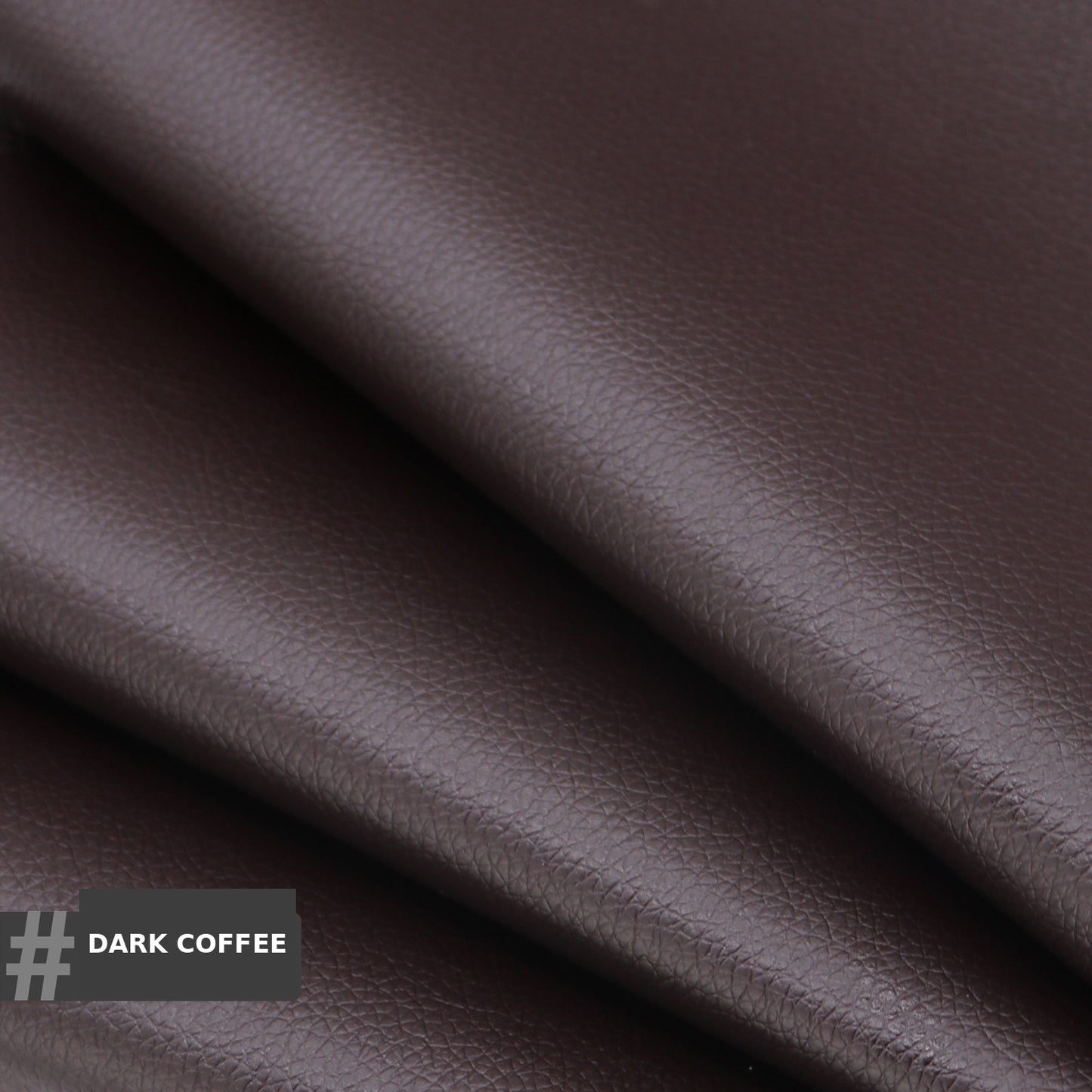
Black Dark Coffee Dark Brown Light Brown Beige Khaki Off White White Grey Wine Red Navy Blue Dark Green
Color chart showing a wide range of leather repair patch shades
Set the Right Expectation

A cosmetic repair—not invisible reupholstery.

The best results come from the right surface, good preparation and a close color match.

✓ Best suited for
  • Smooth leather, faux leather and vinyl-like surfaces
  • Scratches, peeling, worn patches and small holes
  • Flat areas and gentle curves with enough overlap
  • Repairs where a visible patch edge is acceptable
× Not recommended for
  • Suede, nubuck, velvet or heavily textured fabric
  • Wet, oily, dusty or actively flaking surfaces
  • Structural tears at seams or damaged inner cushioning
  • Areas exposed to open flame or extreme heat
Questions Before You Apply

Helpful answers for a better repair.

Can I cut the patch into any shape?

Yes. Use clean, sharp scissors and leave a border around the damaged area. Rounded corners usually sit flatter and are less likely to catch during use.

Will the repair be completely invisible?

It is designed to improve the appearance of damage, not recreate factory upholstery. The edge may remain visible depending on color match, grain, lighting and placement.

Which surfaces give the best adhesion?

Clean, dry and relatively smooth leather, synthetic leather and vinyl-like surfaces. Test a small hidden area first, especially on treated or delicate materials.

Can I move it after it touches the surface?

Minor adjustment may be possible at first, but repeated lifting can weaken the adhesive. Align carefully before pressing the full patch down.

How long will the repair last?

Longevity varies with surface preparation, friction, heat, moisture and placement. High-contact edges and seats may wear faster than decorative or low-contact areas.

How should I clean the repaired area?

Wipe gently with a soft, slightly damp cloth. Avoid soaking the edges, harsh solvents, abrasive pads and aggressive scrubbing.

Product images illustrate example applications. Actual appearance and adhesion vary by material, condition, preparation, placement and color match. This patch is intended for cosmetic surface repair and does not replace professional structural upholstery work.